Audience fit
Care-based companions matched the Japan live-service focus and a main audience of women around 30-40.
Jarvinen Design
Close ×
System design case study / F2P support economy
A system design case study for an F2P game where every pet needed emotional appeal, mechanical output, duplicate value, and long-term resource demand.
01 / Design problem
The game already had walking, cooking, quests, teams, collection tasks, and seasonal goals. Pets had to support those loops as AFK helpers, while also creating a deep resource sink and repeat value for basic, duplicate, and premium pets.
Care-based companions matched the Japan live-service focus and a main audience of women around 30-40.
Pets needed to feed existing loops: ingredients, tickets, treasure, coins, quests, team goals, and seasonal tasks.
Pet Food, Soap, Super Soap, duplicates, and premium pets created multiple reusable reward and purchase surfaces.
The system had to be useful in the background without becoming the whole game.
02 / System model
The design connected presentation, economy, and utility into one repeatable loop: find or buy a pet, raise it, assign it to useful work, collect output, then evolve it by consuming duplicates.
Pets entered through map discovery, events, rewards, loot boxes, and offers.
Players freed trapped pets, then used probability and boosts to charm them into joining.
Pet Food drove a 60-level curve with sharp late-game resource demand.
Each active pet worked on treasure, ingredients, coins, or tickets.
10-minute action cycles turned stats, mood, and time into stored rewards.
Mood, grooming, Soap, and Super Soap created a care layer with mechanical output.
Evolution consumed same-species pets at milestone levels, preserving duplicate value.
Four active slots and pet archetypes made multiple pets useful at the same time.
03 / Player loop
A pet was not only collected. It was acquired, invested into, assigned to a job, and eventually consumed or upgraded through the duplicate economy.
Acquire basic and premium pets through discovery, quests, events, login rewards, loot boxes, and personal offers.
Spend Pet Food, manage mood, groom pets, and merge milestone pets into stronger companions.
Assign pets as active AFK helpers for treasure, ingredients, coins, or tickets according to their strengths.
04 / Core math
Players chose what each active pet should work on. The system then converted 10-minute AFK cycles, mood speed, level base stat, species multipliers, and evolution bonuses into practical rewards.
Collection support for valuable finds and task progress.
Cooking and recipe support for repeatable goals.
Soft-currency support for upgrades and everyday play.
Progression and utility support through ticket collection.
skill = species multiplier x level base stat x evolution bonus
gold per action = (2 x luck skill) / 100
tickets per action = (0.04 x walk skill) / 100
treasure chance = (strength skill x rarity factor) / 100
ingredient chance = (agility skill x rarity factor) / 100
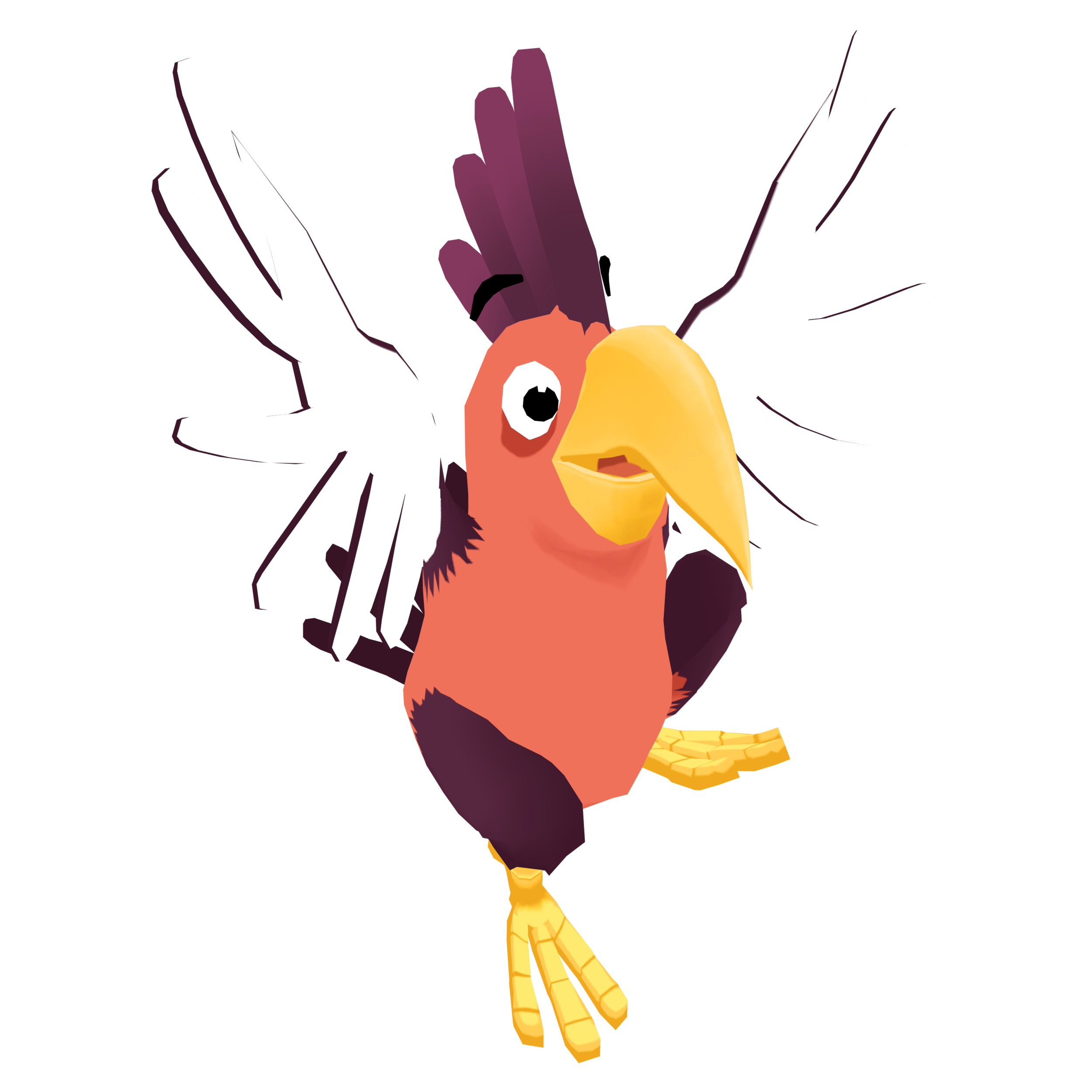
Example pet / Parrot at level 60
Using the level-60 base stat of 1,082 with no evolution bonus, the Parrot becomes strongest in Luck and Agility. The useful part is not the hidden stat number itself, but what it turns into during 10-minute AFK cycles.
05 / Archetypes and specialization
Four species multipliers map directly to four AFK outputs, making the collection itself a toolbox. Multiple pets stayed useful because different loops needed different helpers.
Treasure collection
Ingredient collection
Coin collection
Ticket collection
The strongest examples create clear collection goals without making every pet interchangeable.
Archetype multipliers
These multipliers were applied on top of the level base stat, creating meaningful differences between pets.
| Pet | Agility | Luck | Walk | Strength |
|---|---|---|---|---|
| Bat | 1.2 | 0.8 | 0.6 | 0.4 |
| Cat | 0.6 | 0.8 | 0.2 | 0.4 |
| Owl | 1.0 | 0.6 | 0.8 | 1.6 |
| Squirrel | 1.2 | 0.4 | 0.8 | 0.6 |
| Parrot | 1.2 | 1.6 | 0.6 | 0.6 |
| Crawly | 0.8 | 1.2 | 1.8 | 1.2 |
| Dragon | 0.8 | 1.2 | 0.6 | 0.4 |
| Mouse | 0.8 | 0.4 | 0.6 | 0.2 |
| Creep | 1.2 | 1.2 | 0.8 | 1.8 |
| Frog | 0.6 | 1.2 | 1.6 | 0.6 |
| Hedgehog | 0.2 | 0.8 | 0.4 | 0.6 |
| Sakura Dragon | 1.2 | 1.8 | 0.8 | 1.2 |
| Air Dragon | 0.8 | 1.4 | 1.6 | 1.2 |
| Dog | 1.0 | 0.8 | 1.6 | 0.6 |
| Rabbit | 1.6 | 1.0 | 0.8 | 1.0 |
| Fluffycat | 0.8 | 1.6 | 0.8 | 2.0 |
| Hattifattener | 0.8 | 1.6 | 0.8 | 2.0 |
Air, Water, Ground, and Forest pets randomly search only matching item pools.
The system chooses from matching Item Dex entries and always-allowed items.
Players can replace the random roll with one selected item until the mode changes.
06 / Progression economy
The system used a 60-level food curve, storage caps, and duplicate evolution gates. The important design choice was that late-game investment grew sharply while early levels stayed approachable.
Food costs stayed light early, then became the main long-tail sink after level 40.
The same base curve powered all four skills before pet-specific multipliers were applied.
Full level curve
This is the raw balancing layer behind the cleaner summary charts above.
| Level | Pet Food to Next | Total Food Spent | Base Stat | Item Bag | Ticket Bag | Coin Bag |
|---|---|---|---|---|---|---|
| 1 | 54 | 0 | 100 | 5 | 6 | 288 |
| 2 | 165 | 54 | 102 | 5 | 6 | 294 |
| 3 | 165 | 219 | 104 | 5 | 6 | 300 |
| 4 | 213 | 384 | 106 | 5 | 6 | 305 |
| 5 | 267 | 597 | 108 | 5 | 6 | 311 |
| 6 | 319 | 864 | 110 | 5 | 6 | 317 |
| 7 | 373 | 1,183 | 113 | 5 | 7 | 325 |
| 8 | 426 | 1,556 | 115 | 5 | 7 | 331 |
| 9 | 480 | 1,982 | 117 | 5 | 7 | 337 |
| 10 | Evolution gate | 2,462 | 120 | 5 | 7 | 346 |
| 11 | 480 | 2,462 | 155 | 7 | 9 | 446 |
| 12 | 480 | 2,942 | 158 | 7 | 9 | 455 |
| 13 | 542 | 3,422 | 162 | 7 | 9 | 467 |
| 14 | 542 | 3,964 | 165 | 7 | 10 | 475 |
| 15 | 582 | 4,506 | 168 | 7 | 10 | 484 |
| 16 | 624 | 5,088 | 172 | 7 | 10 | 495 |
| 17 | 666 | 5,712 | 175 | 7 | 10 | 504 |
| 18 | 708 | 6,378 | 178 | 7 | 10 | 513 |
| 19 | 749 | 7,086 | 182 | 7 | 10 | 524 |
| 20 | Evolution gate | 7,835 | 186 | 7 | 11 | 536 |
| 21 | 3,800 | 7,835 | 241 | 7 | 14 | 694 |
| 22 | 3,800 | 11,635 | 246 | 10 | 14 | 708 |
| 23 | 4,000 | 15,435 | 251 | 10 | 14 | 723 |
| 24 | 4,200 | 19,435 | 256 | 10 | 15 | 737 |
| 25 | 4,400 | 23,635 | 261 | 10 | 15 | 752 |
| 26 | 4,600 | 28,035 | 266 | 10 | 15 | 766 |
| 27 | 4,800 | 32,635 | 272 | 10 | 16 | 783 |
| 28 | 4,900 | 37,435 | 277 | 10 | 16 | 798 |
| 29 | 5,100 | 42,335 | 283 | 10 | 16 | 815 |
| 30 | Evolution gate | 47,435 | 288 | 10 | 17 | 829 |
| 31 | 10,500 | 47,435 | 375 | 15 | 22 | 1,080 |
| 32 | 10,500 | 57,935 | 383 | 15 | 22 | 1,103 |
| 33 | 10,900 | 68,435 | 390 | 15 | 22 | 1,123 |
| 34 | 11,500 | 79,335 | 398 | 15 | 23 | 1,146 |
| 35 | 11,900 | 90,835 | 406 | 15 | 23 | 1,169 |
| 36 | 12,500 | 102,735 | 414 | 15 | 24 | 1,192 |
| 37 | 12,900 | 115,235 | 422 | 15 | 24 | 1,215 |
| 38 | 13,400 | 128,135 | 431 | 15 | 25 | 1,241 |
| 39 | 13,900 | 141,535 | 439 | 15 | 25 | 1,264 |
| 40 | Evolution gate | 155,435 | 448 | 15 | 26 | 1,290 |
| 41 | 14,500 | 155,435 | 583 | 20 | 34 | 1,679 |
| 42 | 44,000 | 169,935 | 594 | 20 | 34 | 1,711 |
| 43 | 45,000 | 213,935 | 606 | 20 | 35 | 1,745 |
| 44 | 47,000 | 258,935 | 618 | 20 | 36 | 1,780 |
| 45 | 48,000 | 305,935 | 631 | 20 | 36 | 1,817 |
| 46 | 50,000 | 353,935 | 643 | 20 | 37 | 1,852 |
| 47 | 51,500 | 403,935 | 656 | 20 | 38 | 1,889 |
| 48 | 52,900 | 455,435 | 669 | 20 | 39 | 1,927 |
| 49 | 54,300 | 508,335 | 683 | 20 | 39 | 1,967 |
| 50 | Evolution gate | 562,635 | 696 | 20 | 40 | 2,004 |
| 51 | 74,000 | 562,635 | 905 | 25 | 52 | 2,606 |
| 52 | 75,000 | 636,635 | 923 | 25 | 53 | 2,658 |
| 53 | 77,000 | 711,635 | 942 | 25 | 54 | 2,713 |
| 54 | 78,000 | 788,635 | 961 | 25 | 55 | 2,768 |
| 55 | 80,000 | 866,635 | 980 | 25 | 56 | 2,822 |
| 56 | 81,500 | 946,635 | 999 | 25 | 58 | 2,877 |
| 57 | 82,900 | 1,028,135 | 1,019 | 25 | 59 | 2,935 |
| 58 | 94,300 | 1,111,035 | 1,040 | 25 | 60 | 2,995 |
| 59 | 94,300 | 1,205,335 | 1,061 | 25 | 61 | 3,056 |
| 60 | Max | 1,299,635 | 1,082 | 25 | 62 | 3,116 |
07 / Duplicate economy
At each gate, two pets of the same species and level became one stronger pet. This turned repeat discoveries, premium pulls, and offer pets into long-term progression instead of dead duplicates.
A successful roll adds +10% to one AFK role. The remaining 50% produces no bonus.
08 / Care as a modifier
Mood was not only presentation. It modified AFK speed, while Soap and Super Soap gave the care loop clear resource value through mood recovery, enhanced ingredients, and pet attraction.
Real walking restored mood for every active pet, connecting the companion fantasy back to the core walking loop.
Grooming added 600 ordinary mood through a small interaction, turning care into a repeatable resource action.
Super Mode let a pet collect enhanced ingredients and attract another pet of the same species.
09 / Reward and store economy
Pet Food, pets, Soap, and Super Soap could appear in free rewards, premium tracks, login rewards, group rewards, loot boxes, direct store packs, and personal offers. The system gave each reward a clear use.
Pet Food for 20 rubies
20 food / rubyPet Food for 30 rubies
33.3 food / rubyPet Food for 50 rubies
100 food / rubyPet Food grew power, pets created collection and duplicate value, Soap restored mood, and Super Soap unlocked temporary high-value actions.
The same content family could be reused across seasons without becoming meaningless, because each item fed a different part of the loop.
10 / Design reflection
I would make player-facing stat effects clearer, soften or better explain the 50% no-bonus evolution result, and smooth the late-game food wall without removing the long-tail sink.
Outcome
The design linked identity, care, AFK output, duplicate value, progression math, and reusable reward resources into one long-term companion economy.