Jarvinen Design Close

System design case study / F2P support economy

Designing a companion economy

A system design case study for an F2P game where every pet needed emotional appeal, mechanical output, duplicate value, and long-term resource demand.

17 pet archetypes 4 AFK modes 60 progression levels 5 evolution gates 4 active slots Pet Food / Soap / Super Soap
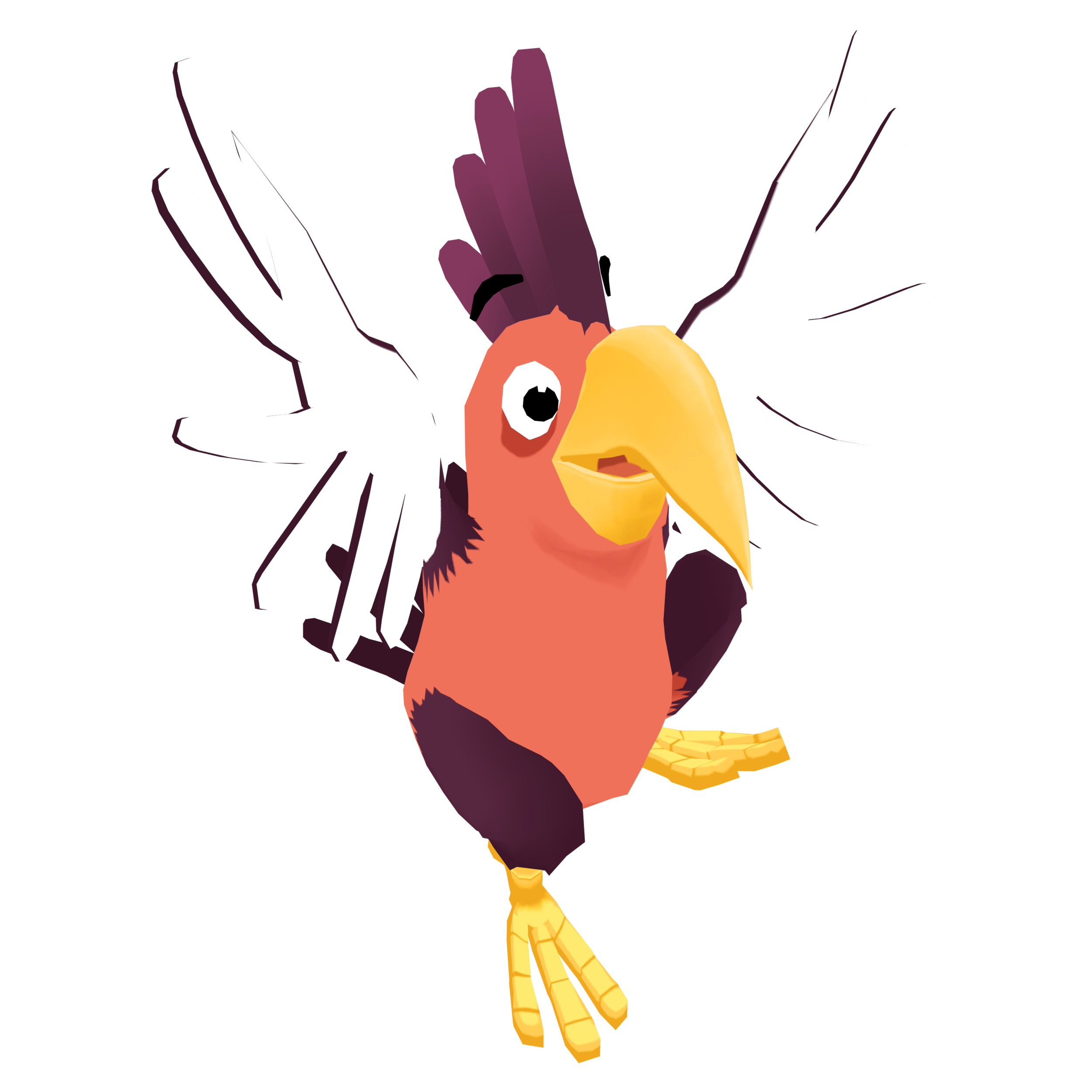
HD parrot pet artwork from the pet system

01 / Design problem

Add long-term progression through care and AFK utility

The game already had walking, cooking, quests, teams, collection tasks, and seasonal goals. Pets had to support those loops as AFK helpers, while also creating a deep resource sink and repeat value for basic, duplicate, and premium pets.

Audience fit

Care-based companions matched the Japan live-service focus and a main audience of women around 30-40.

Core-game fit

Pets needed to feed existing loops: ingredients, tickets, treasure, coins, quests, team goals, and seasonal tasks.

Economy fit

Pet Food, Soap, Super Soap, duplicates, and premium pets created multiple reusable reward and purchase surfaces.

Design constraint

The system had to be useful in the background without becoming the whole game.

4Active pet slots expanded the need for multiple pets
4AFK collection modes created clear usage roles
60Levels gave every pet a long visible upgrade path
5Evolution gates converted duplicates into lasting value

02 / System model

A pet moved through discovery, care, output, and evolution

The design connected presentation, economy, and utility into one repeatable loop: find or buy a pet, raise it, assign it to useful work, collect output, then evolve it by consuming duplicates.

Find or acquire

Pets entered through map discovery, events, rewards, loot boxes, and offers.

Rescue and catch

Players freed trapped pets, then used probability and boosts to charm them into joining.

Feed and level

Pet Food drove a 60-level curve with sharp late-game resource demand.

Assign AFK mode

Each active pet worked on treasure, ingredients, coins, or tickets.

Collect output

10-minute action cycles turned stats, mood, and time into stored rewards.

Care and boost

Mood, grooming, Soap, and Super Soap created a care layer with mechanical output.

Merge duplicates

Evolution consumed same-species pets at milestone levels, preserving duplicate value.

Repeat with roles

Four active slots and pet archetypes made multiple pets useful at the same time.

Pets visible on the walking map
Map presencePets appeared in the walking world, making companions feel connected to daily movement.
Pet grooming interaction screen
Grooming careThe care loop used a direct pet interaction that restored mood and made the helper feel personal.
Pet release minigame scene
Rescue minigamePlayers first freed the trapped pet from rubble, then made a probability throw to charm it into joining them.
Pet catch percentage and element bonus UI
Visible chanceElement effects and success chance made boosts understandable before spending resources.

03 / Player loop

The loop turned a companion into a progression system

A pet was not only collected. It was acquired, invested into, assigned to a job, and eventually consumed or upgraded through the duplicate economy.

01

Collect

Acquire basic and premium pets through discovery, quests, events, login rewards, loot boxes, and personal offers.

02

Invest

Spend Pet Food, manage mood, groom pets, and merge milestone pets into stronger companions.

03

Specialize

Assign pets as active AFK helpers for treasure, ingredients, coins, or tickets according to their strengths.

04 / Core math

Time, mood, level, and species role became output

Players chose what each active pet should work on. The system then converted 10-minute AFK cycles, mood speed, level base stat, species multipliers, and evolution bonuses into practical rewards.

10mOne AFK action cycle
144Maximum stored action cycles
24hMaximum offline accumulation
4Pets could support the player simultaneously
1Select active pet
2Choose output mode
3Wait for 10-minute cycles
4Collect stored rewards
Strength icon
Treasure

Collection support for valuable finds and task progress.

Agility icon
Ingredients

Cooking and recipe support for repeatable goals.

Luck icon
Gold

Soft-currency support for upgrades and everyday play.

Walk icon
Tickets

Progression and utility support through ticket collection.

Skill stat skill = species multiplier x level base stat x evolution bonus
Gold output gold per action = (2 x luck skill) / 100
Ticket output tickets per action = (0.04 x walk skill) / 100
Treasure output treasure chance = (strength skill x rarity factor) / 100
Ingredient output ingredient chance = (agility skill x rarity factor) / 100

Example pet / Parrot at level 60

One pet becomes four different economic outputs

Using the level-60 base stat of 1,082 with no evolution bonus, the Parrot becomes strongest in Luck and Agility. The useful part is not the hidden stat number itself, but what it turns into during 10-minute AFK cycles.

Gold mode34.6gold per 10-minute action, capped by a 3,116 coin bag Ingredient mode65%common ingredient roll chance per action, capped by a 25 item bag Ticket mode37tickets across a full 24-hour AFK window before storage limits Treasure mode1.6%5-star treasure roll chance per action before mood or evolution bonuses

05 / Archetypes and specialization

Species were not skins; they were economic profiles

Four species multipliers map directly to four AFK outputs, making the collection itself a toolbox. Multiple pets stayed useful because different loops needed different helpers.

effective output = species multiplier × level base stat × evolution bonus
Strength icon
Strength

Treasure collection

Agility icon
Agility

Ingredient collection

Luck icon
Luck

Coin collection

Walk icon
Walk

Ticket collection

Role specialists

The strongest examples create clear collection goals without making every pet interchangeable.

Hattifattener
2.0
Rabbit
1.6
Sakura Dragon
1.8
Crawly
1.8

Archetype multipliers

Each species had a different economic profile

These multipliers were applied on top of the level base stat, creating meaningful differences between pets.

PetAgilityLuckWalkStrength
Bat1.20.80.60.4
Cat0.60.80.20.4
Owl1.00.60.81.6
Squirrel1.20.40.80.6
Parrot1.21.60.60.6
Crawly0.81.21.81.2
Dragon0.81.20.60.4
Mouse0.80.40.60.2
Creep1.21.20.81.8
Frog0.61.21.60.6
Hedgehog0.20.80.40.6
Sakura Dragon1.21.80.81.2
Air Dragon0.81.41.61.2
Dog1.00.81.60.6
Rabbit1.61.00.81.0
Fluffycat0.81.60.82.0
Hattifattener0.81.60.82.0

Element-filtered finds

Air, Water, Ground, and Forest pets randomly search only matching item pools.

Random discovery

The system chooses from matching Item Dex entries and always-allowed items.

Targeted search

Players can replace the random roll with one selected item until the mode changes.

06 / Progression economy

Pet Food carried the long-tail sink

The system used a 60-level food curve, storage caps, and duplicate evolution gates. The important design choice was that late-game investment grew sharply while early levels stayed approachable.

1.30mNormal Pet Food on one straight level 1-60 path
2.46mTotal Pet Food when the duplicate merge tree is included
32Base pets represented by the final companion
1,082Level-60 base stat before species multipliers

Pet Food required by level band

Food costs stayed light early, then became the main long-tail sink after level 40.

Levels 1-10
2,462 Levels 11-20
5,373 Levels 21-30
39,600 Levels 31-40
108,000 Levels 41-50
407,200 Levels 51-60
737,000

Base stat growth

The same base curve powered all four skills before pet-specific multipliers were applied.

Lv 1
100 Lv 10
120 Lv 20
186 Lv 30
288 Lv 40
448 Lv 50
696 Lv 60
1,082

Full level curve

Level-by-level Pet Food, base stat, and storage caps

This is the raw balancing layer behind the cleaner summary charts above.

Level Pet Food to Next Total Food Spent Base Stat Item Bag Ticket Bag Coin Bag
154010056288
21655410256294
316521910456300
421338410656305
526759710856311
631986411056317
73731,18311357325
84261,55611557331
94801,98211757337
10Evolution gate2,46212057346
114802,46215579446
124802,94215879455
135423,42216279467
145423,964165710475
155824,506168710484
166245,088172710495
176665,712175710504
187086,378178710513
197497,086182710524
20Evolution gate7,835186711536
213,8007,835241714694
223,80011,6352461014708
234,00015,4352511014723
244,20019,4352561015737
254,40023,6352611015752
264,60028,0352661015766
274,80032,6352721016783
284,90037,4352771016798
295,10042,3352831016815
30Evolution gate47,4352881017829
3110,50047,43537515221,080
3210,50057,93538315221,103
3310,90068,43539015221,123
3411,50079,33539815231,146
3511,90090,83540615231,169
3612,500102,73541415241,192
3712,900115,23542215241,215
3813,400128,13543115251,241
3913,900141,53543915251,264
40Evolution gate155,43544815261,290
4114,500155,43558320341,679
4244,000169,93559420341,711
4345,000213,93560620351,745
4447,000258,93561820361,780
4548,000305,93563120361,817
4650,000353,93564320371,852
4751,500403,93565620381,889
4852,900455,43566920391,927
4954,300508,33568320391,967
50Evolution gate562,63569620402,004
5174,000562,63590525522,606
5275,000636,63592325532,658
5377,000711,63594225542,713
5478,000788,63596125552,768
5580,000866,63598025562,822
5681,500946,63599925582,877
5782,9001,028,1351,01925592,935
5894,3001,111,0351,04025602,995
5994,3001,205,3351,06125613,056
60Max1,299,6351,08225623,116
7,835Pet Food across levels 1-20 kept early progress approachable.
147,600Pet Food across levels 21-40 introduced real investment pressure.
1.14mPet Food across levels 41-60 made late-game growth the main sink.

07 / Duplicate economy

Evolution made repeated pets stay valuable

At each gate, two pets of the same species and level became one stronger pet. This turned repeat discoveries, premium pulls, and offer pets into long-term progression instead of dead duplicates.

2:1Same species and same level required at every gate.
32Base pets represented by one naturally built final pet.
31Duplicate pets consumed through the merge tree.
61hTimer sum across the five milestone gates on one straight path.
10
1 hour5 rubies to skip
20
4 hours10 rubies to skip
30
8 hours15 rubies to skip
40
16 hours20 rubies to skip
50
32 hours25 rubies to skip
Tutorial banner explaining pet evolution and visual change
Evolution onboardingEvolving pets communicated a stronger companion and a visible new look, making duplicate investment easier to understand.
50%chance of a bonus

Evolution roll

A successful roll adds +10% to one AFK role. The remaining 50% produces no bonus.

Treasure bonus12.5%
Ingredient bonus12.5%
Coin bonus12.5%
Ticket bonus12.5%

08 / Care as a modifier

Care fantasy had mechanical output

Mood was not only presentation. It modified AFK speed, while Soap and Super Soap gave the care loop clear resource value through mood recovery, enhanced ingredients, and pet attraction.

Sad pet mood icon 0.6×Mood 0-500
Neutral pet mood icon 1.0×Mood 501-1,000
Happy pet mood icon 1.2×Mood 1,001-2,000
Thrilled pet mood icon 1.5×Mood above 2,000

Walking

Real walking restored mood for every active pet, connecting the companion fantasy back to the core walking loop.

Standard Soap

Grooming added 600 ordinary mood through a small interaction, turning care into a repeatable resource action.

Super Soap

Super Mode let a pet collect enhanced ingredients and attract another pet of the same species.

+600Standard Soap mood from grooming
+600Super Mood from Super Soap
+200Mood restored by one level-up
Tutorial banner explaining Super Mode and enhanced food finding
Super Mode onboardingSuper Mode explained that grooming resources could enhance ingredient finds and create a chance to attract another pet.

09 / Reward and store economy

The pet system created reusable reward surfaces

Pet Food, pets, Soap, and Super Soap could appear in free rewards, premium tracks, login rewards, group rewards, loot boxes, direct store packs, and personal offers. The system gave each reward a clear use.

Small pack400

Pet Food for 20 rubies

20 food / ruby
Medium pack1,000

Pet Food for 30 rubies

33.3 food / ruby
The large pack is 5× more efficient per ruby than the small pack.

Reward family

Pet Food grew power, pets created collection and duplicate value, Soap restored mood, and Super Soap unlocked temporary high-value actions.

Why it mattered

The same content family could be reused across seasons without becoming meaningless, because each item fed a different part of the loop.

10 / Design reflection

What worked, where pressure built, and what I would revisit

System strengths

  • Readable species identities
  • Player-directed AFK output
  • Long-term value for basic, premium, and duplicate pets
  • Element-based random and targeted searching
  • Super Mode creates temporary jackpot potential
  • Visible storage and output growth

Balance pressure

  • Steep level 41-60 food wall
  • 50% no-bonus evolution result
  • Large store efficiency jump
  • Collection chance may exceed 100%
  • Selected-item rules rely on client validation

What I would revisit

I would make player-facing stat effects clearer, soften or better explain the 50% no-bonus evolution result, and smooth the late-game food wall without removing the long-tail sink.

Outcome

A collection system where every pet was both a character and an economic decision.

The design linked identity, care, AFK output, duplicate value, progression math, and reusable reward resources into one long-term companion economy.

Game design Systems design Economy balancing Progression design